What Is AI SEO, And Does Your Local Business Need It?
More people than ever are using AI search tools—in the same way they use traditional search engines—to find answers to their problems, to find a painter, or to find the closest restaurant with their favorite cuisine.
If your business isn’t showing up in AI search results, you risk becoming invisible to a growing share of potential buyers. Enter AI SEO–search engine optimization that ensures your company or brand is visible to AI search tools.
What is AI SEO?
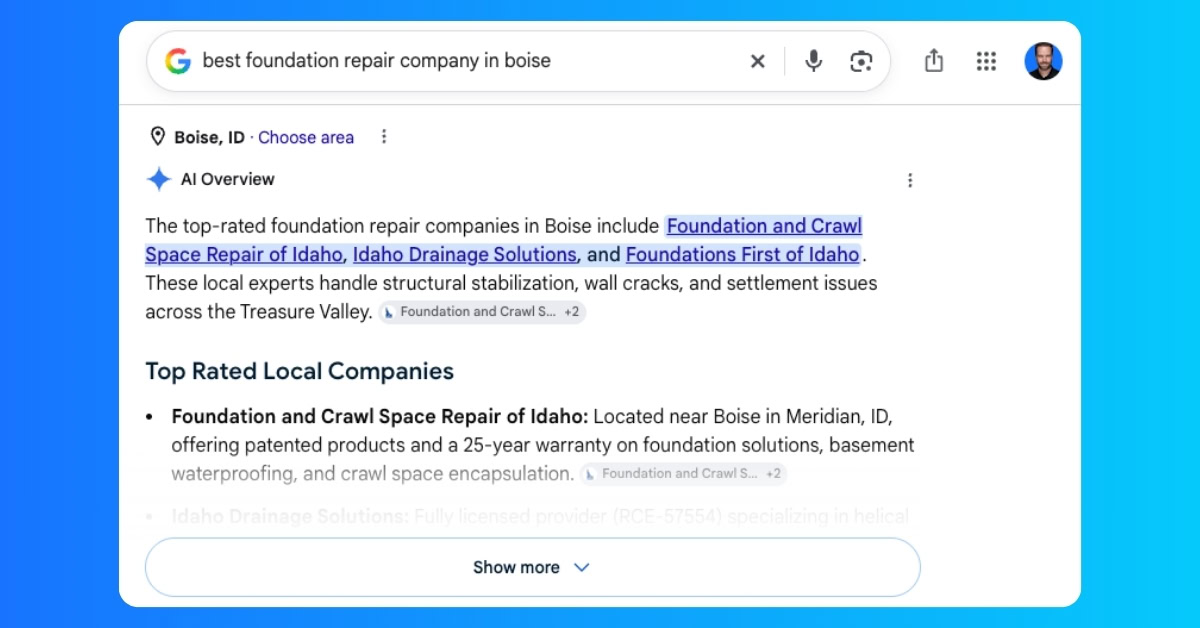
AI SEO means optimizing your online presence so tools like ChatGPT, Perplexity, Gemini and Google’s AI Overviews can find, understand and recommend your business.
It actually draws on a lot of the same signals that traditional SEO does, including your reviews, citations (directory listings), website content, and even your Google Business profile. But these signals carry different weight in an AI search tool.
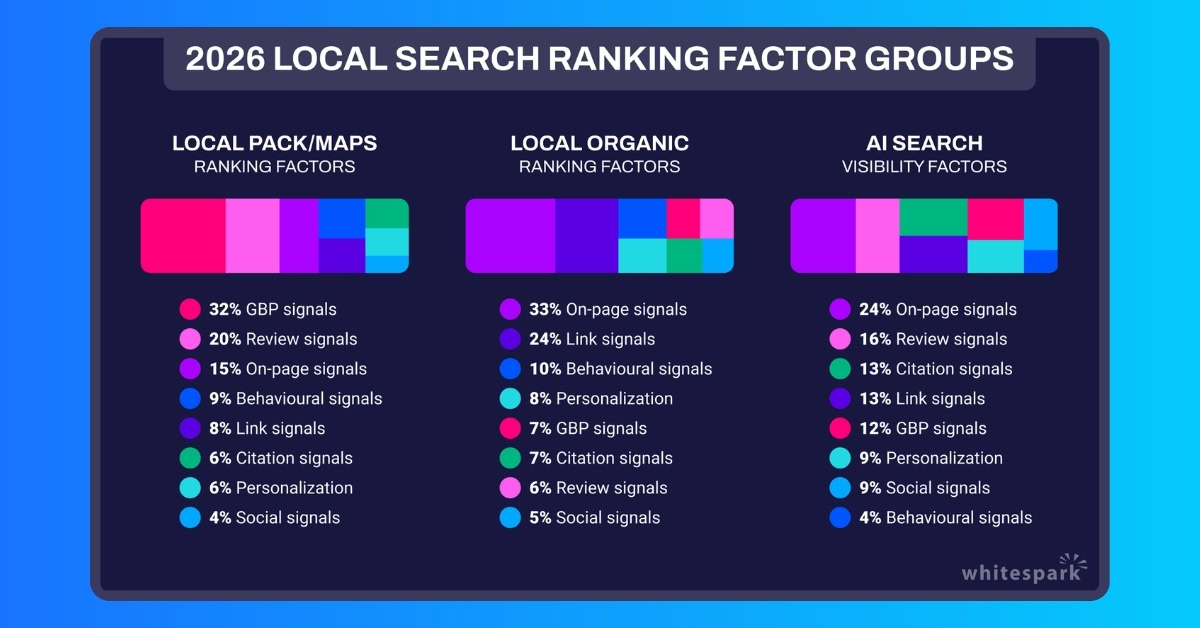
According to the 2026 Local Search Ranking Factors survey conducted by Whitespark, citations account for 13% of AI search visibility, which is nearly double the weight in traditional search engine rankings. Google Business Profile signals drop from 32% in local pack rankings to 12% for AI visibility.
So yes, it’s the same recipe, but different ingredients.
What’s the difference between AI SEO and SEO?
I’m going to go out on a limb and say that I think the majority of business owners don’t care what all the different terms are. It’s funny because sometimes I’ll open up Linkedin and the first couple of posts in the feed are marketers debating the terms.
But for the average local business owner, it doesn’t matter what you call it. They just want more customers/calls/foot traffic.
Here’s a quick crash course on what these different terms mean:
Local SEO stands for Local Search Engine Optimization, and gets you a spot in the 10 blue links, the local pack at the top, or inside Google Maps.
AI SEO gets your business mentioned inside an AI generated answer, and many times this happens without a click through to your website at all.
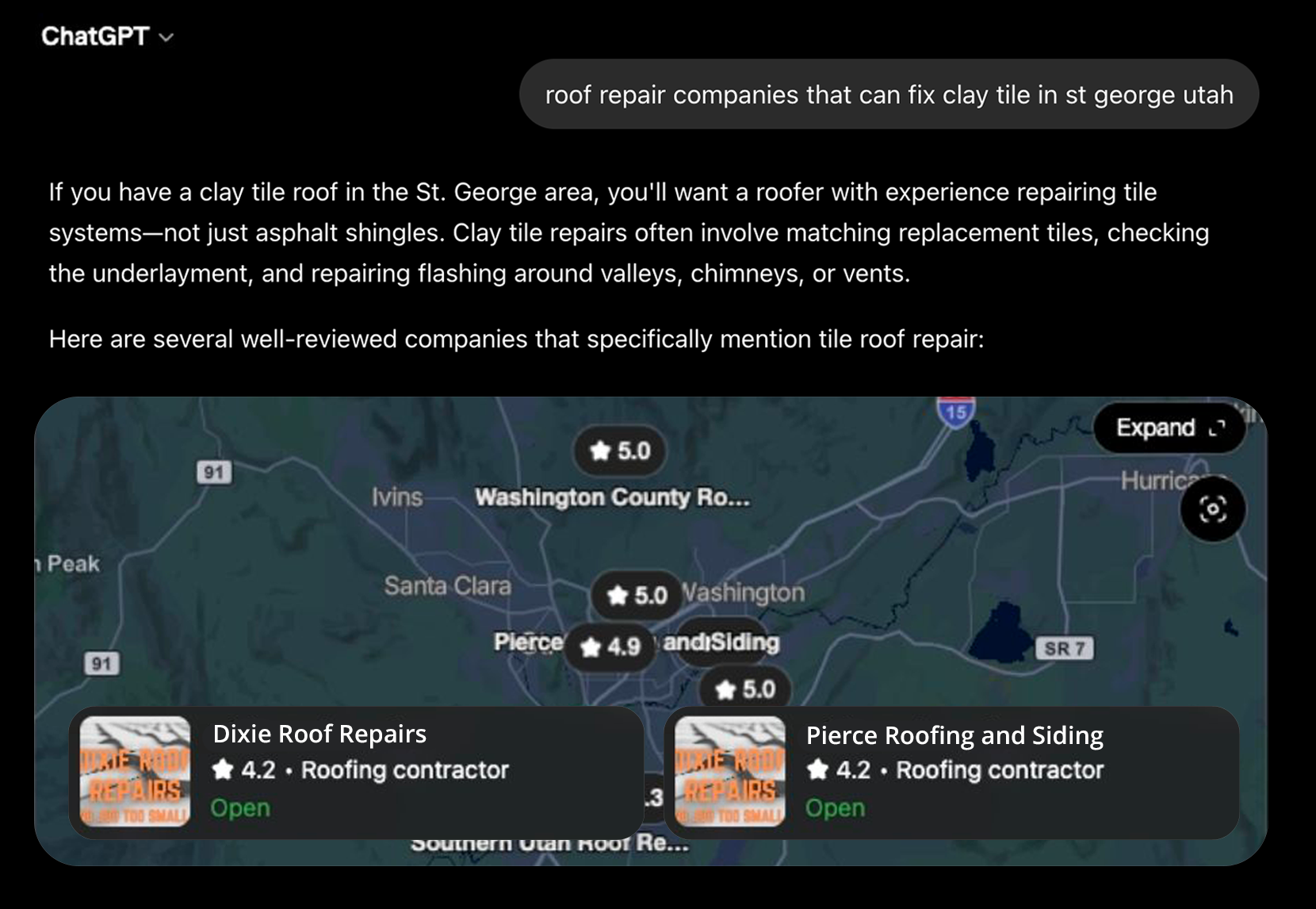
The process is different too. When someone searches Google, they’re given a set of search results for that one query. When someone types a prompt into an AI tool, the AI breaks that question into a handful of related sub-questions, and then pulls out answers from chunks of content on various websites, not the page on the website itself. This is called a “query fan-out”.
So this actually changes how we write content. A long “ultimate guide” might rank well in a search engine, but in an AI tool short sections written like a question and answer tend to perform better, since the AI is grabbing pieces of the content, not reading it from start to finish.
Can ChatGPT do SEO?
ChatGPT can’t do SEO on its own. These AI platforms are useful as tools to help with an SEO campaign, and can do things like help you draft an outline for content, brainstorm ideas or summarize complex data. What they can’t do is create and execute a strategy for your business, manage technical aspects of your website, or keep your visibility consistent over time.
I saw a few weeks ago that Google rolled out its own Gemini integration with Google Business profiles that lets the AI write review responses, update business hours and publish Google Posts directly. I think right now it has interesting capabilities and I’ll keep watching it, but Google’s own guidelines have cautioned against automated content, so to avoid suspension you can manually update your Google Business profile without the need for AI. (Plus unless you’re managing multiple locations with separate GBPs there’s no need to automate this!)
Bottom line, AI tools are exactly that- tools. They aren’t a replacement for a strategy or a team with depth of knowledge and experience in your industry.
Where does AI SEO fit into a complete marketing ecosystem?
When we meet with new clients, I like to explain how marketing efforts fit into three buckets: paid media (Google ads and Facebook ads, for example), owned media (your SEO, your website and your email list), and earned media (reviews, mentions and press). AI SEO isn’t a fourth bucket. It’s a new surface, fed by your owned and earned media working together.
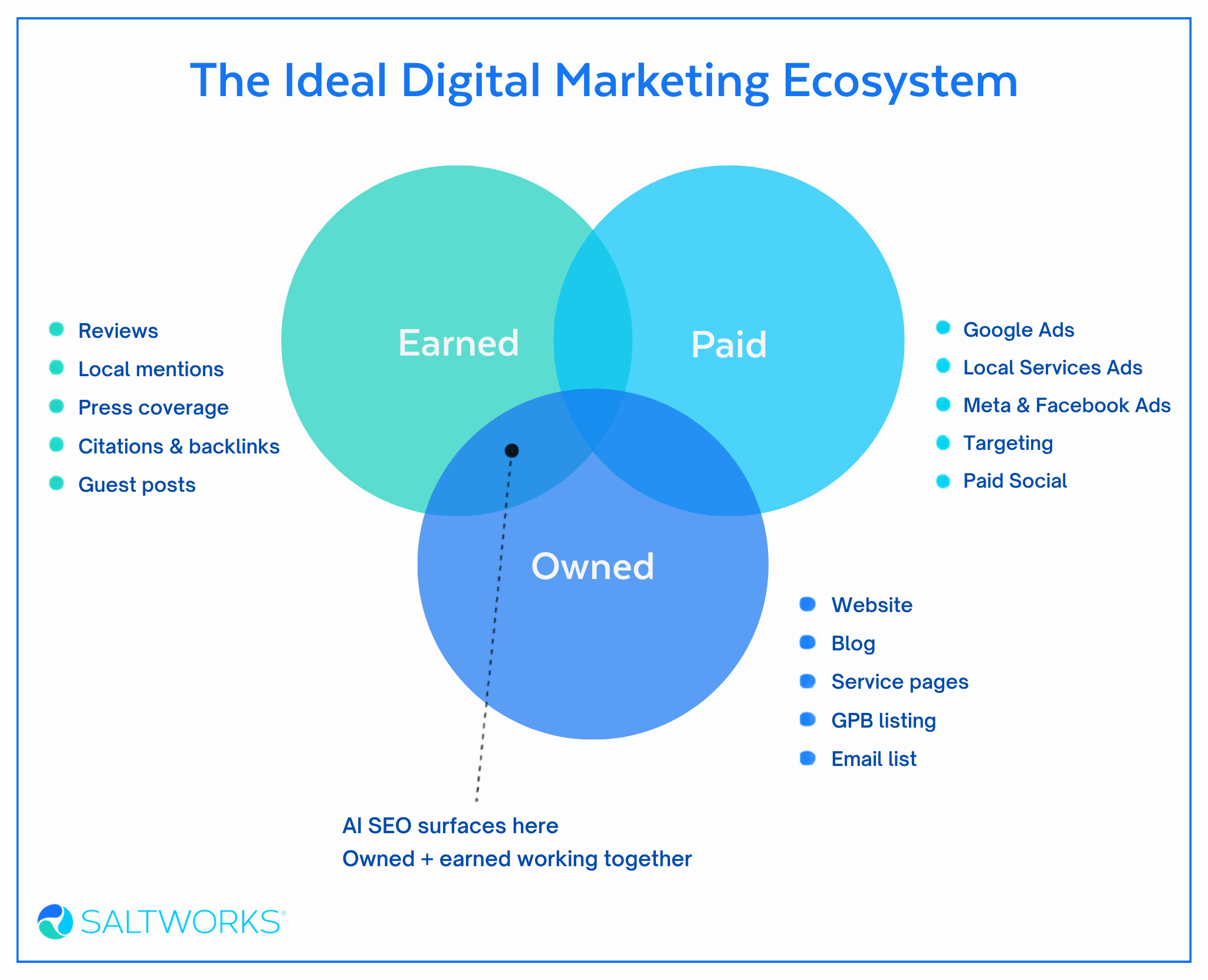
A blog post like this one that you’re reading is owned media. The reviews that help it get cited are earned. And AI visibility for this blog post, and Saltworks as a whole, is what happens when both signals are strong.
But here’s something I want to be upfront about- there’s no such thing as “ranking in AI search” like the way you rank in Google. Sparktoro founder Rand Fishkin ran a study asking AI tools the same questions over and over, and the results were interesting. ChatGPT and Google’s AI have a less than 1 in 100 chance of giving you the exact same list of recommendations twice! So anyone trying to sell you an AI rankings report is selling you a number that resets itself the next time someone asks the same question.
At Saltworks, instead of chasing a rank that doesn’t consistently exist, our approach is to build broad visibility across all the places your customers actually search, including Google, Bing, ChatGPT and even social platforms. Then we measure the outcomes that matter: the actual traffic and conversions showing up in your Google Analytics channel reports.
People who are actively searching and evaluating local businesses, on any platform, are some of the highest quality opportunities you can get.
The goal isn’t picking one channel and hoping it holds. It’s showing up everywhere your customers are already looking, whether that’s the 1-10 organic results, the local pack, Google Maps, or an AI generated answer.
As a full service agency, AI SEO isn’t a separate service for us. It’s connected to the local SEO, social media and reputation management work we’re already doing for our clients, which means we can build that visibility without asking you invest additional time or resources.
Marketers have long organized their efforts into three buckets: paid media (what you pay to place), owned media (what you control, like your website and content), and earned media (what others say about you, like reviews and press). AI SEO isn’t a fourth bucket. It’s a new surface fed by owned content and earned signals working together. A blog post like this one is owned. The reviews that help it get cited are earned. AI visibility is what happens when both are strong.
Here’s something we want to be upfront about: there’s no such thing as ranking in AI search, not in the way you rank in Google. Rand Fishkin and SparkToro ran a large study asking AI tools the same questions over and over. The result: ChatGPT and Google’s AI have less than a 1 in 100 chance of giving you the exact same list of recommendations twice. Anyone selling you an AI ranking report is selling you a number that resets itself the next time someone asks the same question.
So instead of chasing a rank that doesn’t reliably exist, our approach is to build broad visibility across the places your customers actually search, Google, Bing, ChatGPT, and social platforms, then measure the outcome that matters: the actual traffic and conversions showing up in your Google Analytics channel reports. That’s a number you can trust.
People who are actively searching, on any platform, are some of the highest quality opportunities a local business gets. The goal isn’t picking one channel and hoping it holds. It’s showing up everywhere your customers are already looking, whether that’s the 1-10 organic results, the local pack, Google Maps, or an AI generated answer.
As a full service agency, we’re focused on generating new business for you. So if your potential customers are using AI search tools, we’ll put together an AI SEO strategy that will help you show up there too. It’s connected to the SEO, content, and reputation management work we’re already doing for our clients.