Why You Should Mystery Shop Your Business Today
Back in 2021, my friend Susan called me with a challenge. Susan’s growing home services company was getting hundreds of lead form submissions each month through her website, but it was only converting a small percentage of the leads to customers. “My sales team tells me the quality of the leads we’re getting is very low,” she said. “I’ve got to figure out what’s going on—this is brutal!”
We agreed to take her company on as a client and the Saltworks team began researching the issue. Were the leads actually low quality? Certainly, the people filling out the “Request a Quote” form were committed enough to complete a rather lengthy form with 8-10 fields. In most of the lead forms that Susan’s sales team had marked as “bad leads”, even the optional fields had been filled out. So it seemed that visitors weren’t just checking a box; they were putting some thought into it.
 Next, we dug into the company CRM and started tracking lead response times and interactions with prospects. In reviewing the records of the “connect calls,” far too many leads were marked as “they’ve already gone with another company.” How can that be if the leads are being responded to quickly?
Research on consumer behavior among people searching for home services shows that unless the consumer has a “go-to” company that they always use for the service, it’s common for people to have multiple browser windows open on their computer, and for them to fill out multiple inquiry forms in a row and/or to call multiple companies for quotes within a 10- to 15-minute window.
We knew what we had to do next. We needed to mystery shop Susan’s home services business as well as her closest competitors. With her consent (but without a heads-up to her sales team), we had our small team of mystery shoppers complete the lead form on the website, carefully noting the date and time each form was submitted. To avoid suspicion that this was a test, the service details entered in the form were completely legit—using valid home addresses, real problems that the “prospects” needed service for, and verbiage that signaled real purchase intent.
Within a week, we had the results—and the answer to the “low conversion rate” problem was shocking. All of Susan’s competitors were responding to lead forms within 1 hour. The average response time for her sales team was 2-4 hours.
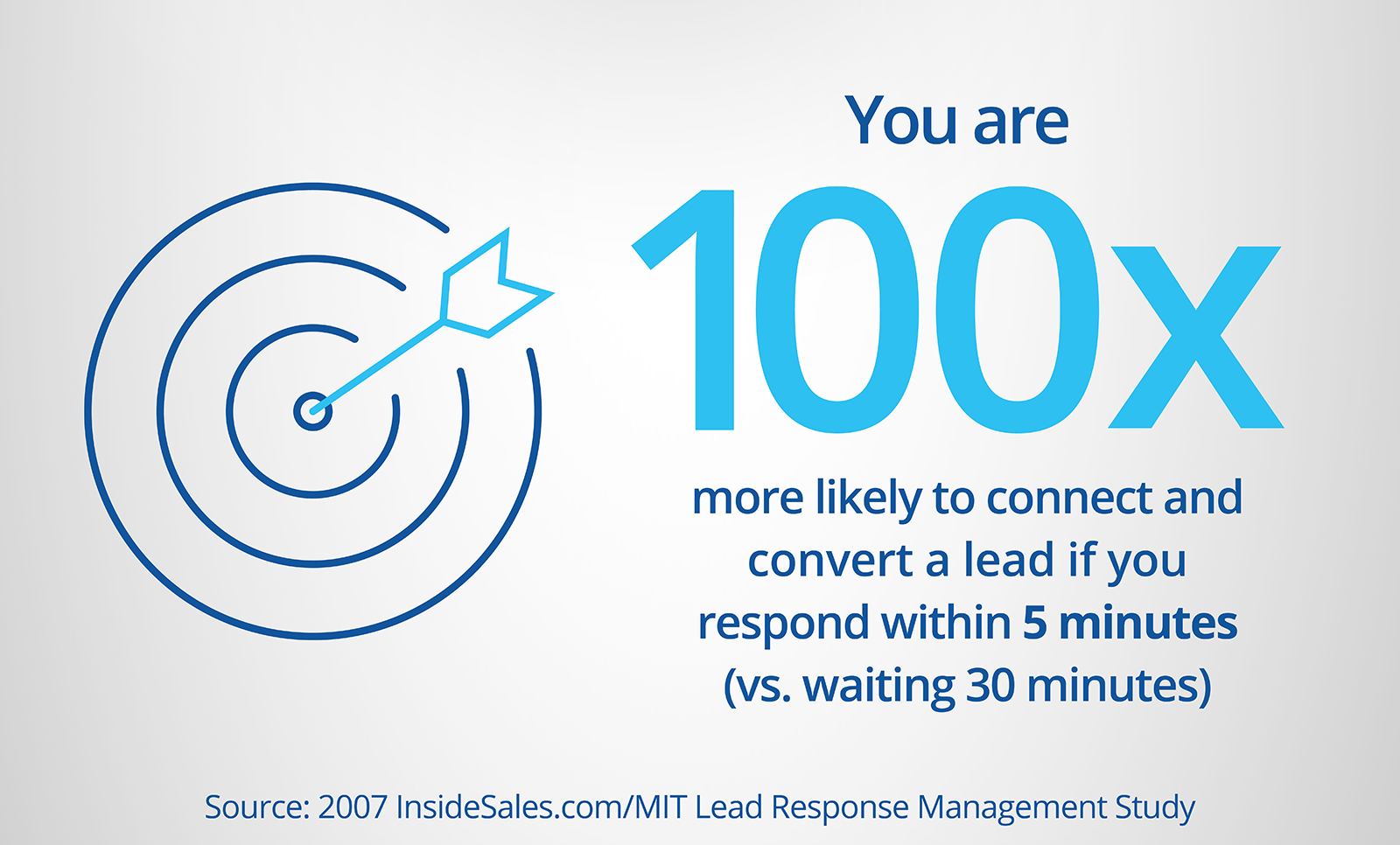
That gap matters more than most business owners realize. According to a study from MIT and InsideSales.com analyzing over 15,000 leads, the companies that call a lead within 5 minutes are 100 times more likely to actually connect than those that wait even 30 minutes. The odds of reaching a lead drop by more than 10 times in just the first hour.
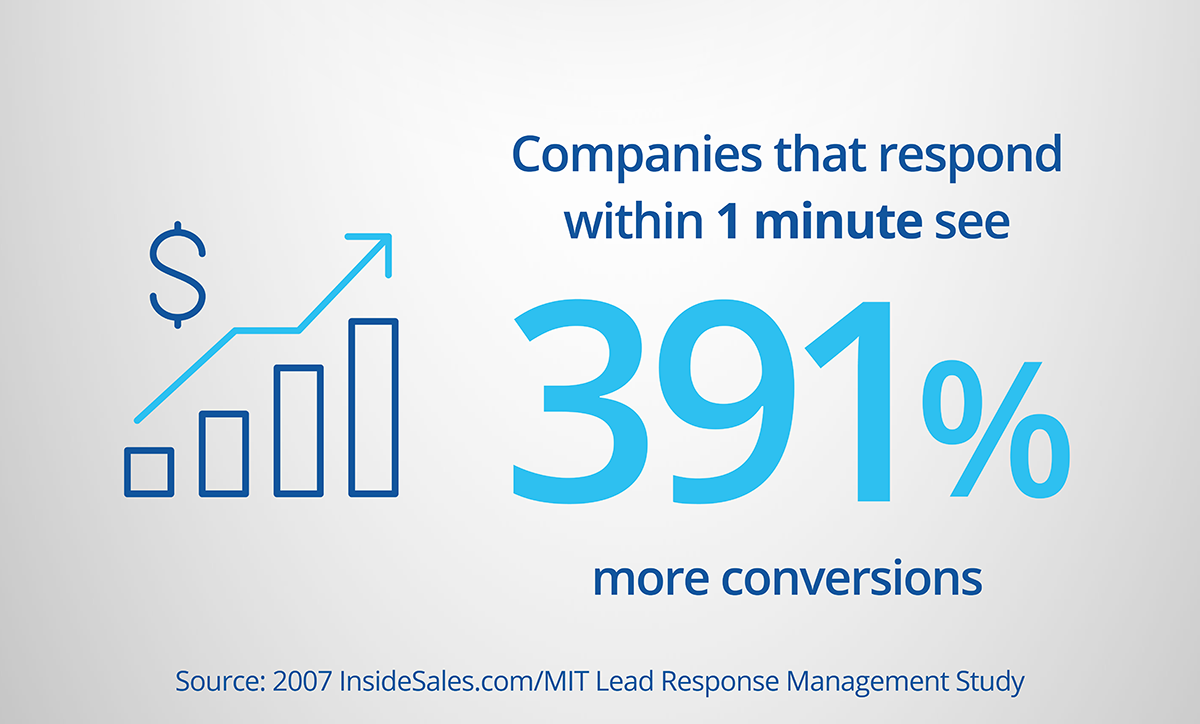
 One of Susan’s competitors was consistently responding to submitted lead forms within 5 minutes, and one competitor (whom I’ll refer to with the fictional name “Company X”) was calling each mystery shopper’s cell phone within 60 seconds of a lead form being submitted.
“Company X” really had their act together. They were polite, responsive, and moved the conversation along to suggest having an estimator come out to generate a cost estimate. If the mystery shopper was non-committal, the rep was collaborative and suggested a follow-up call the next day. Here’s the brilliant part. Later that day, if the mystery shopper still needed more time to think about it, “Company X” texted the mystery shopper a 10% discount offer if an estimator appointment was booked within 2 hours. All of this before Susan’s sales team had even made the first contact with the lead.
In Susan’s industry, a successful lead response time was a 60-second game, and Susan’s team was showing up to the playing field long after the game was over—after the stadium lights were turned off and the scoreboard had already declared the winner.
 Once this issue was revealed, Susan was able to address it and get her sales team and her company back on track. She changed how incoming leads were monitored, assigned, and followed up on, and began offering cash rewards to employees for fastest response times.
Evaluating the customer experience when someone calls or texts your business phone number can also pay big dividends. When calling your number, does a real person answer? Does it go to a phone tree? How long does it take to reach a real person and/or get their questions answered? If the competition has a real, live human who answers within 3 rings and that human is friendly, knowledgeable, and can provide answers (or quickly connect the caller to someone who can provide the answers), prospects could be abandoning your phone tree in favor of a real conversation.
If you have undiagnosed issues that may be costing you sales and impeding your company’s growth, mystery shopping could be the answer. That is, if it’s executed with a mindset of continuous improvement, not blame. Uncovering needed improvements can be transformational for your company.

Brands of all sizes leverage mystery shopping companies to maintain their reputation for elite customer service and strict quality control. Secret shoppers help identify opportunities to improve customer service, ensure consistent brand standards, enhance the overall customer experience, and evaluate employee compliance with company policies and procedures.
Mystery shopping can help you assess:
- Website, chat, click-and-collect, delivery
- Price competitiveness
- Sales rep greeting, friendliness, product knowledge, professionalism
- Whether employees ask qualifying questions, recommend products, or close sales
- ID checks, required disclosures, safety procedures
- Uniforms, scripts, merchandising, cleanliness, signage
- Shopping competitors to compare pricing, promotions, and service
- Ease of finding products, wait times, checkout experience
- Following procedures, teamwork, attentiveness
- Stock levels, shelf presentation, merchandising
- Whether employees follow cash handling or return policies
If you decide mystery shopping could help your business, you may want to connect with the Mystery Shopping Professionals Association (MSPA). If you have ample budget for a comprehensive mystery shopping campaign to evaluate multiple areas of your customer experience (throughout the life cycle of the customer relationship with your company), MSPA has a directory of mystery shopping companies you can connect with.
If your goal is to diagnose lead-response issues, Saltworks can conduct a basic mystery shopping campaign to identify problems and recommend improvements. Because of Saltworks’ holistic approach to marketing, we’re interested in helping your company at the various stages of the customer journey—converting website visitors to leads—and converting leads to customers.